

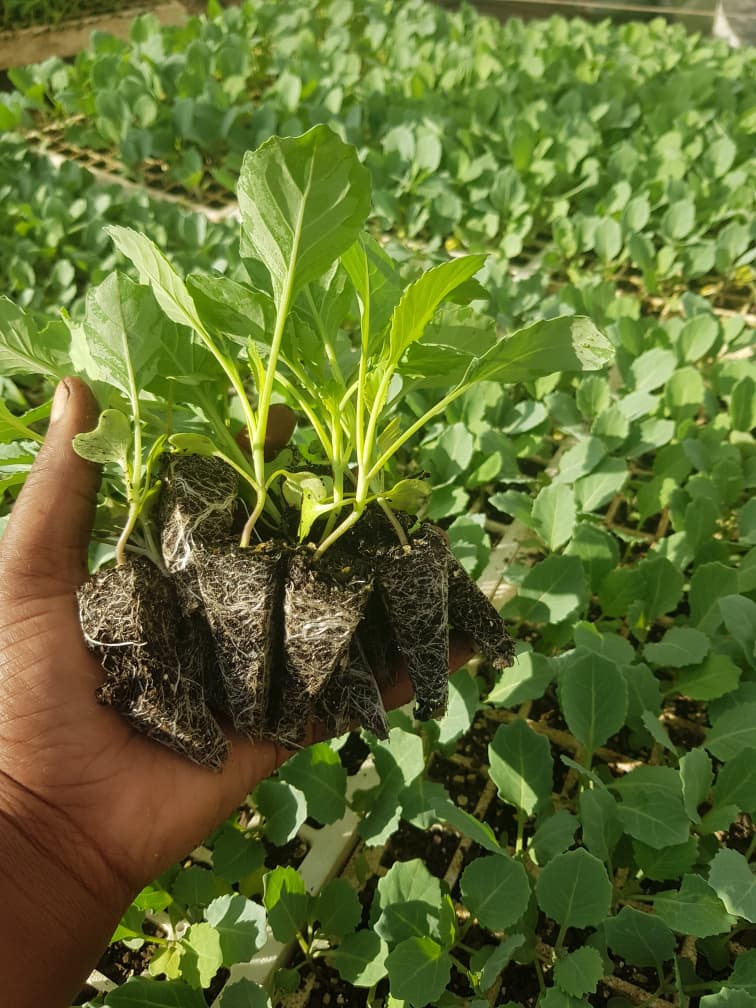
🥬Indica Cabbage Seedlings Farming Guide in Zimbabwe — Reliable Hybrid for High Yields and Uniform Heads
🌿 Introduction to Indica Cabbage Seedlings
Indica Cabbage is a popular hybrid variety recognized for its excellent adaptability, uniform head size, and superior disease resistance. It performs exceptionally well across Zimbabwe’s major agricultural zones — from Mashonaland to Matabeleland — making it a top pick for both smallholder and commercial farmers.
Farmers appreciate Indica for its compact heads, firm structure, and excellent field-holding ability, allowing flexibility in harvesting and transport.
For other high-performance cabbage varieties, explore our related farming guides:
🌦️ Ideal Climate and Soil Requirements
Indica Cabbage thrives under cool to moderately warm conditions, making it suitable for Zimbabwe’s highveld and mid-altitude regions.
Temperature Range: 15°C–28°C
Rainfall: 400–800 mm annually
Soil Type: Fertile, well-drained loamy or sandy loam soil
Ideal pH: 6.0–6.8
Avoid heavy clay or poorly drained soils. Apply lime if the soil pH is below 6.0 to prevent clubroot disease and improve nutrient uptake.
🌱 Seedling Stage and Land Preparation
Transplanting Age: 4–6 weeks after sowing, once seedlings have 4–6 true leaves.
Hardening: Reduce watering one week before transplanting to strengthen seedlings.
Land Preparation Steps:
Plough the land to a depth of 25–30 cm.
Apply 10–15 tons/ha of decomposed manure during soil preparation.
Harrow to achieve a fine tilth.
Form raised beds or ridges to improve drainage and root aeration.
📅 Planting and Spacing
Spacing: 45 cm between plants × 60 cm between rows.
Planting Depth: Same as seedling tray level.
Best Planting Time:
Cool Season: March–August
Warm Season: September–February (with irrigation)
Transplant during cool hours (morning or evening) and water immediately after planting to reduce shock.
💧 Irrigation and Water Management
Cabbage is highly water-dependent, and consistent irrigation ensures healthy head formation.
Frequency: 3–4 times per week in dry periods.
Preferred System: Drip irrigation — conserves water and reduces disease spread.
Mulching: Apply dry grass or crop residues to retain moisture and regulate temperature.
Avoid water stress during head development to prevent cracking or undersized heads.
🌿 Fertilization Schedule
| Growth Stage | Fertilizer Type | Application Rate | Timing |
|---|---|---|---|
| Pre-planting | Compound C (6:15:12) | 300–400 kg/ha | Before transplanting |
| Early growth | Ammonium Nitrate (34.5% N) | 150 kg/ha | 3 weeks after transplanting |
| Head formation | Ammonium Nitrate | 150 kg/ha | 6 weeks after transplanting |
Enhance soil fertility with organic inputs such as composted manure or vermicompost for long-term productivity.
🪱 Pest and Disease Management
🐛 Common Pests
Diamondback moth (Plutella xylostella): Use Bacillus thuringiensis (BT) or Coragen.
Aphids: Apply Imidacloprid or neem-based insecticides.
Cutworms: Protect seedlings with soil-applied insecticide during transplanting.
🦠 Common Diseases
Black rot: Use certified seedlings and rotate crops every 3 years.
Downy mildew: Control with preventive fungicides like Ridomil Gold.
Clubroot: Maintain soil pH above 6.5 through liming and good drainage.
Adopt Integrated Pest Management (IPM) to reduce chemical use and maintain ecological balance.
🌸 Crop Management Practices
Keep fields weed-free during the first 6 weeks.
Hill up around the base to strengthen root support.
Conduct regular field inspections for pest or nutrient stress.
Rotate cabbage with non-cruciferous crops like maize, beans, or groundnuts.
🧑🌾 Harvesting and Yield
Maturity Period: 75–85 days after transplanting.
Harvest Signs: Compact, heavy heads (2.5–4.5 kg) with a bright green appearance.
Harvesting Tip: Use a sharp knife and retain 2–3 wrapper leaves for protection.
Yield Potential:
50–70 tons per hectare under optimal growing conditions.
💰 Market and Profitability
Indica Cabbage has strong demand in both local and regional markets for its durability and appealing look.
Target Markets:
Harare (Mbare Musika)
Mutare (Sakubva Market)
Bulawayo Produce Market
Supermarkets and restaurants nationwide
Profit Estimates:
A well-managed hectare can generate US$2,500–4,000, depending on season and market prices.
🌍 Sustainable and Climate-Smart Practices
Practice crop rotation to maintain soil fertility.
Use organic compost and manure for improved soil structure.
Apply mulch to conserve soil moisture and reduce weed pressure.
Adopt drip irrigation to save water during dry seasons.
🧾 Record Keeping
Keep detailed records for:
Planting dates and seedling batches
Fertilizer and pesticide use
Harvest quantity and quality
Market prices and profit margins
You can use digital tools such as FarmRite or Google Sheets to track and analyze farm data easily.
📞 Where to Buy Indica Cabbage Seedlings in Zimbabwe
Source certified Indica Cabbage Seedlings from reputable suppliers such as:
Always verify seed certification and variety for the best performance and disease resistance.
❓ Frequently Asked Questions (FAQ)
Q1: How long does Indica Cabbage take to mature?
It matures in 75–85 days after transplanting, depending on climate and management.
Q2: What is the recommended spacing for Indica Cabbage?
Plant 45 cm between plants and 60 cm between rows for optimal head size and airflow.
Q3: How much can I yield per hectare?
With proper management, expect 50–70 tons per hectare.
Q4: How do I prevent cabbage head cracking?
Maintain consistent irrigation during head formation to prevent sudden water stress.

