

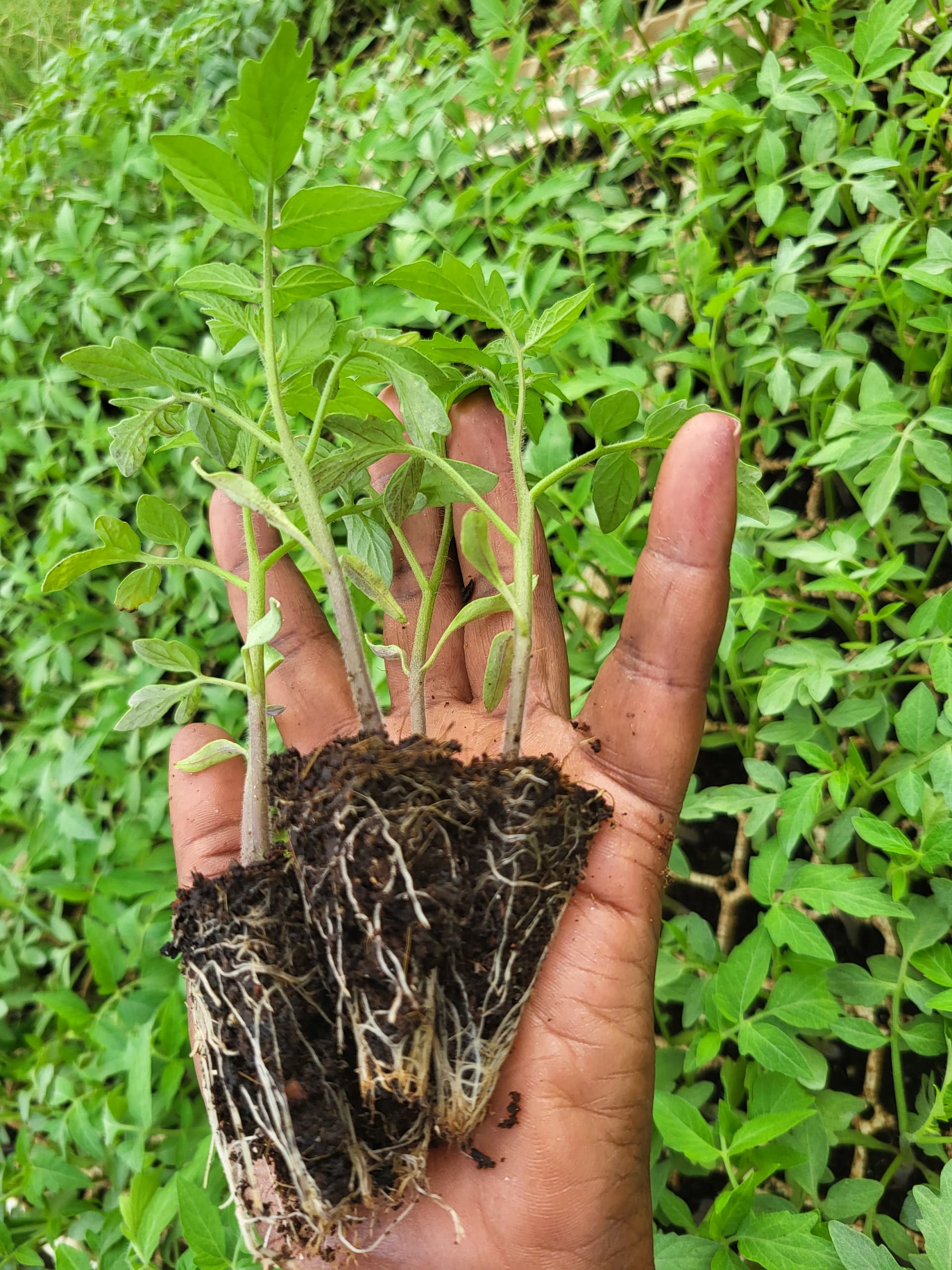
🌱Tengeru 97 Tomato Seedlings in Zimbabwe – Reliable Open-Field Performer for Farmers
Introduction
The Tengeru 97 Tomato is a popular open-pollinated variety widely grown in Zimbabwe and across East and Southern Africa. Known for its excellent adaptability, high yield potential, and resistance to key tomato diseases, Tengeru 97 is ideal for both smallholder farmers and commercial producers looking for dependable performance in open-field conditions.
Whether you farm in Mutoko, Mazowe, or Gweru, this variety delivers uniform fruits, excellent flavor, and strong market demand — making it a smart investment for farmers across Zimbabwe.
🌾 1. Variety Overview
| Feature | Description |
|---|---|
| Variety Name | Tengeru 97 |
| Crop Type | Semi-determinate open-pollinated tomato |
| Maturity Period | 80–90 days after transplanting |
| Yield Potential | 60–80 tonnes per hectare under optimal conditions |
| Fruit Characteristics | Medium to large fruits (100–120g), firm, oval-shaped, and deep red at maturity |
| Best Growing Season | Cool dry season or mild temperatures with irrigation |
| Market Use | Fresh market and processing (sauces and pastes) |
🌿 2. Climate and Soil Requirements
Tengeru 97 performs well under a wide range of Zimbabwean agro-climatic zones, from Mashonaland East to Manicaland.
Ideal Conditions:
Temperature: 18–30°C
Soil Type: Fertile, well-drained loam or sandy-loam soils
pH Range: 5.5–7.0
Rainfall: 600–800mm annually
Sunlight: Full sun exposure (6–8 hours daily)
Tip: Avoid waterlogged areas or poorly drained soils to prevent root rot and bacterial wilt.
🌱 3. Land Preparation and Planting
Steps for Success:
Soil Preparation: Deep plough to about 30cm and break clods for a fine tilth.
Soil Fertility: Incorporate well-decomposed manure (8–10 tonnes per hectare).
Bed Formation: Create raised beds (1m wide) for drainage and root aeration.
Transplanting:
Transplant 3–4-week-old seedlings with 4–5 true leaves.
Spacing: 40–50cm between plants, 100cm between rows.
Transplant Time: Early morning or late afternoon to reduce transplant shock.
Water immediately after transplanting.
Mulching: Apply dry grass or plastic mulch to reduce water loss and suppress weeds.
💧 4. Irrigation and Water Management
Tomatoes are sensitive to water stress, especially during flowering and fruit filling.
Use drip irrigation for uniform water supply and reduced leaf wetness.
Early growth: Water lightly and frequently.
Flowering & fruiting: Increase watering frequency.
Avoid irregular watering to prevent fruit cracking and blossom-end rot.
Stop irrigation 7–10 days before harvest to harden fruits and improve shelf life.
🌾 5. Fertilizer Application Schedule
| Stage | Fertilizer | Rate (kg/ha) | Purpose |
|---|---|---|---|
| Pre-planting | Compound C (5:15:12) | 600–800 | Base fertilizer for root development |
| 2 weeks after transplanting | Ammonium Nitrate | 150 | Promotes vegetative growth |
| Flowering stage | Calcium Nitrate | 100–150 | Prevents blossom-end rot |
| Fruit filling | Potassium Nitrate | 150–200 | Enhances fruit color, size, and taste |
💡 Tip: Apply fertilizers in split doses and irrigate immediately after each top dressing for best uptake.
🛡️ 6. Pest and Disease Management
Tengeru 97 shows moderate resistance to bacterial wilt and Fusarium wilt, but integrated management remains key.
Common Pests:
Tomato Leaf Miner (Tuta absoluta)
Whiteflies
Aphids
Cutworms
🧪 Control: Use registered insecticides (such as Coragen, Belt, or Actara) and rotate chemical groups to avoid resistance.
Common Diseases:
Early Blight (Alternaria solani) – Control with Mancozeb or Ridomil Gold.
Late Blight (Phytophthora infestans) – Spray with copper-based fungicides.
Powdery Mildew – Manage using Sulphur-based fungicides and good field sanitation.
Cultural practices like crop rotation, pruning, and field hygiene greatly reduce pest and disease pressure.
🍅 7. Harvesting and Post-Harvest Handling
When to Harvest:
Harvest when fruits turn deep red and firm.
Pick every 2–3 days during peak production to maintain quality.
Avoid overripe fruits to ensure better transport and market prices.
Post-Harvest Tips:
Handle fruits gently to prevent bruising.
Pack in plastic crates, not sacks.
Store in a cool, well-ventilated area (12–15°C) with 85–90% humidity.
Tengeru 97 tomatoes have a shelf life of up to 12 days, ideal for local and regional markets.
💰 8. Yield and Profitability in Zimbabwe
Under proper management, Tengeru 97 yields 60–80 tonnes per hectare, offering excellent returns for both small and large-scale growers.
The variety’s disease tolerance, adaptability, and good transport quality make it a preferred choice for open markets and retailers across Zimbabwe.
Farmers in Mutare, Bindura, and Chegutu report high market acceptance due to the fruit’s firmness and appealing color.
🌍 9. Where to Buy Tengeru 97 Tomato Seedlings in Zimbabwe
Purchase certified Tengeru 97 Tomato Seedlings from trusted local suppliers such as Carol’s Seedlings Zimbabwe.
Carol’s Seedlings offers vigorously grown, disease-free, and hardened seedlings ready for transplanting — ensuring a uniform, healthy start to your tomato farming journey.
❓ 10. Frequently Asked Questions (FAQ)
Q1: How long does Tengeru 97 tomato take to mature?
It matures in 80–90 days after transplanting, depending on temperature and management.
Q2: What is the average fruit size?
Fruits weigh 100–120 grams, oval-shaped, firm, and deep red at full ripeness.
Q3: Can I grow Tengeru 97 in open fields?
✅ Yes. It is an open-field variety specifically bred for tropical and subtropical conditions.
Q4: Is Tengeru 97 resistant to diseases?
It has moderate resistance to Fusarium wilt and Bacterial wilt, but still requires good crop hygiene and rotation.
🏷️ Recommended Reads
💬 Final Thoughts
The Tengeru 97 Tomato Seedling remains a dependable, cost-effective choice for farmers in Zimbabwe seeking high yields, adaptability, and market resilience.
With proper crop management and certified seedlings from Carol’s Seedlings Zimbabwe, you can achieve a profitable, disease-resistant tomato harvest season after season.


Your guide has opened my mind as I start my Tengeru tomato growing project though on small scale. Thanks a lot.
Happy to know that this is helpful. Document the journey and upscale as you grow, all the best!