

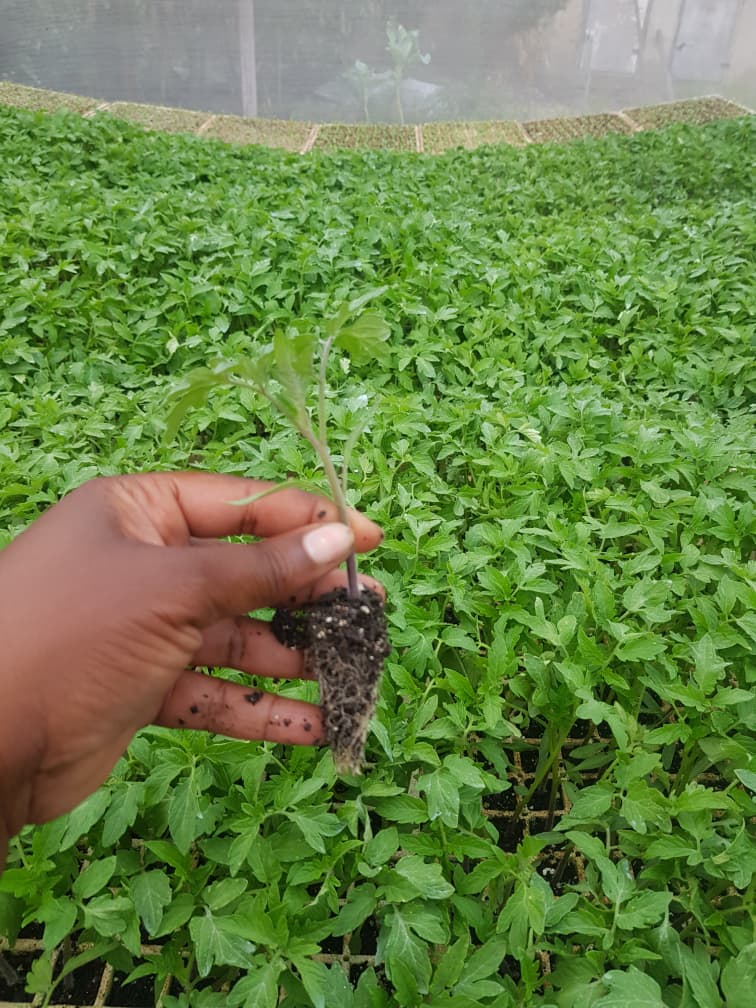
🍅Rodade Plus Tomato Seedlings in Zimbabwe – The Reliable Open-Field Performer
Introduction
The Rodade Plus Tomato is a well-known open-pollinated tomato variety that has earned the trust of farmers across Zimbabwe for decades. Favored for its adaptability, firm fruits, and excellent flavor, Rodade Plus is ideal for smallholder and commercial farmers seeking consistent yields and dependable market returns.
Whether you’re growing tomatoes in Mazowe, Chegutu, or Mutare, Rodade Plus stands out for its tolerance to heat and disease, making it one of the most resilient varieties for open-field tomato farming in Zimbabwe.
🌾 1. Variety Overview
| Feature | Description |
|---|---|
| Variety Name | Rodade Plus |
| Crop Type | Open-pollinated determinate tomato |
| Maturity Period | 85–95 days after transplanting |
| Yield Potential | 50–70 tonnes per hectare under good management |
| Fruit Characteristics | Medium to large, round fruits (100–130g), firm, uniform red color |
| Best Growing Season | All year round (best in cool dry season) |
| Market Use | Fresh market, processing, and retail supply chains |
🌿 2. Climate and Soil Requirements
Rodade Plus tomatoes grow best under moderate, warm conditions and are well suited for Zimbabwe’s open-field farming systems.
Ideal Growing Conditions:
Temperature Range: 18–30°C
Rainfall: 600–800mm per year (supplement with irrigation)
Soil Type: Well-drained sandy loam or loamy soils
pH Range: 5.5–7.0
Sunlight: At least 6–8 hours of direct sunlight daily
Tip: Avoid low-lying or waterlogged areas to reduce the risk of bacterial wilt and root rot.
🌱 3. Land Preparation and Transplanting
Preparation Steps:
Soil Testing: Check pH and nutrient status before planting. Apply lime if soil is acidic.
Ploughing: Deep plough (30–35cm) to loosen the soil and remove weeds.
Manure Application: Apply 8–10 tonnes/ha of well-decomposed compost or cattle manure.
Bed Preparation: Form raised beds (1m wide) to promote drainage and reduce soil-borne diseases.
Transplanting:
Use 3–4-week-old seedlings with 4–5 true leaves.
Spacing: 40–50cm between plants, 100cm between rows.
Transplant in the late afternoon to minimize transplant shock.
Water immediately after transplanting.
Mulching: Apply grass or plastic mulch to conserve soil moisture and suppress weed growth.
💧 4. Irrigation and Water Management
Tomatoes require consistent watering, especially during flowering and fruiting stages.
Establishment phase: Light, frequent irrigation.
Flowering & fruiting phase: Increase watering frequency to maintain soil moisture.
Avoid overwatering — it can cause fruit cracking and fungal infections.
Best practice: Use drip irrigation for efficient water use and reduced disease spread.
Stop watering 7–10 days before harvest to harden fruits and extend shelf life.
🌾 5. Fertilizer Program
| Growth Stage | Fertilizer Type | Rate (kg/ha) | Purpose |
|---|---|---|---|
| Pre-planting | Compound C (5:15:12) | 600–800 | Root development and early growth |
| 2 weeks after transplanting | Ammonium Nitrate | 150 | Promote vegetative growth |
| At flowering | Calcium Nitrate | 100–150 | Strengthen stems and prevent blossom-end rot |
| Fruit filling | Potassium Nitrate | 150–200 | Enhance fruit color, firmness, and sweetness |
✅ Tip: Apply fertilizers in split doses and always irrigate after application.
🛡️ 6. Pest and Disease Management
Rodade Plus offers moderate resistance to bacterial wilt, Fusarium wilt, and nematodes, but integrated pest management remains essential.
Common Pests:
Tomato Leaf Miner (Tuta absoluta)
Aphids
Whiteflies
Cutworms
🧪 Control: Use insecticides such as Coragen, Tihan, or Belt — rotate active ingredients to avoid resistance.
Common Diseases:
Early Blight (Alternaria solani) – Manage with Mancozeb or Ridomil Gold.
Late Blight (Phytophthora infestans) – Use copper-based fungicides.
Powdery Mildew – Control with sulphur-based fungicides.
Cultural control tips:
Practice crop rotation with non-solanaceous crops (e.g., maize, beans).
Stake plants to improve air circulation.
Remove and burn infected plants early.
🍅 7. Harvesting and Post-Harvest Handling
Harvesting Tips:
Harvest when fruits are firm and fully red.
Pick every 2–3 days during peak harvest.
Handle gently to avoid bruising and mechanical damage.
Post-Harvest:
Use plastic crates instead of sacks for transportation.
Store in a cool, shaded area (12–15°C) with 85–90% humidity.
Rodade Plus tomatoes maintain good firmness and shelf life (up to 10–12 days), making them excellent for long-distance markets.
💰 8. Yield and Profitability in Zimbabwe
With proper care, Rodade Plus tomatoes yield 50–70 tonnes per hectare, depending on soil fertility and management practices.
Farmers in Marondera and Bindura report that Rodade Plus produces uniform fruits that fetch premium prices in local and regional markets.
Its low seed cost, adaptability, and resilience make it ideal for both small-scale and commercial operations.
🌍 9. Where to Buy Rodade Plus Tomato Seedlings in Zimbabwe
Get certified Rodade Plus Tomato Seedlings from Carol’s Seedlings Zimbabwe — your trusted partner for quality, disease-free, and hardened seedlings ready for transplanting.
Carol’s Seedlings ensures strong root systems, uniform growth, and high field survival rates for every batch.
❓ 10. Frequently Asked Questions (FAQ)
Q1: How long does Rodade Plus tomato take to mature?
Rodade Plus matures in 85–95 days after transplanting.
Q2: What is the average fruit size and weight?
Each fruit weighs 100–130 grams, with a round, firm shape ideal for both fresh and processing markets.
Q3: Can I grow Rodade Plus during the rainy season?
Yes, but ensure good staking, drainage, and regular fungicide application. The cool dry season gives the best results.
Q4: What type of farmer benefits from Rodade Plus?
Both smallholder and commercial farmers benefit from its adaptability, yield, and low input costs.
🏷️ Recommended Read
Tengeru 97 Tomato Seedlings
💬 Final Thoughts
The Rodade Plus Tomato Seedling continues to be one of Zimbabwe’s most dependable and profitable tomato varieties. Its excellent adaptability, good taste, and strong disease tolerance make it perfect for open-field production across the country.
For certified, high-quality seedlings, contact Carol’s Seedlings Zimbabwe — your trusted partner in profitable and sustainable tomato farming.

