

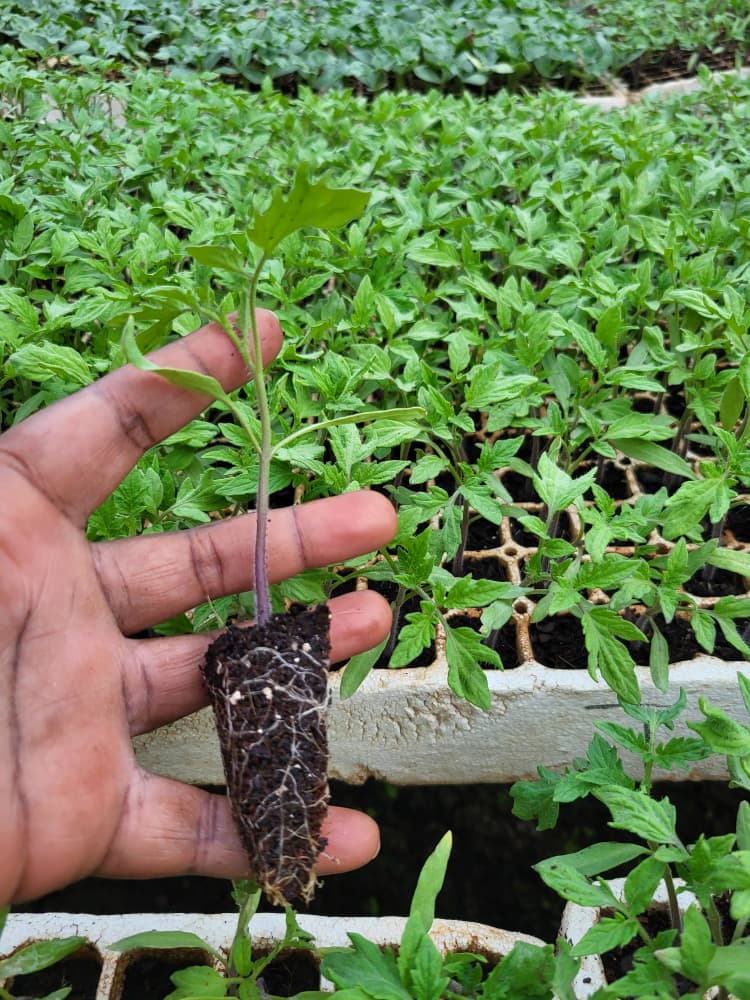
Sagatan Tomato Seedlings in Zimbabwe: A Complete Growing Guide for Farmers
Introduction
Tomatoes are a cornerstone of vegetable farming in Zimbabwe, valued by both small-scale and commercial farmers for their profitability and market demand. Among the top-performing hybrid varieties is the Sagatan Tomato, a high-yield, disease-resistant hybrid bred for African conditions.
Whether you are farming for the fresh market, processing industry, or export, Sagatan Tomato Seedlings offer excellent productivity, strong plants, and uniform fruiting — making them one of the most reliable tomato varieties for Zimbabwean farmers.
This guide will take you through everything you need to know about growing Sagatan tomatoes successfully — from land preparation to harvesting and marketing.
1. Variety Overview: What Makes Sagatan Tomatoes Special
Sagatan is a high-performing hybrid tomato variety with strong adaptability across Zimbabwe’s diverse agro-ecological zones.
Key Features:
High yield potential: 60–85 tons per hectare under good management.
Uniform fruit size: Round, firm, and attractive red fruits.
Excellent shelf life: Suitable for transport to distant markets.
Disease resistance: Tolerant to Fusarium wilt, bacterial wilt, and nematodes.
Wide adaptability: Performs well in both open-field and greenhouse conditions.
Its vigor and resilience make it perfect for farmers in regions like Mashonaland East, Manicaland, Midlands, and Masvingo.
2. Ideal Growing Conditions for Sagatan Tomatoes in Zimbabwe
Sagatan tomatoes grow best under warm, moderately humid conditions.
| Parameter | Ideal Range |
|---|---|
| Temperature | 18°C – 30°C |
| Rainfall | 600–800 mm annually |
| Soil Type | Loamy or sandy loam, well-drained |
| Soil pH | 5.5 – 6.8 |
| Elevation | 400–1800 m above sea level |
Ensure your site receives full sunlight (at least 6 hours per day) and good drainage to prevent root diseases.
3. Land Preparation and Soil Fertility
For optimal results, prepare the land 2–3 weeks before transplanting:
Plough deeply (at least 30 cm).
Harrow until a fine tilth is achieved.
Apply 10–15 tons/ha of well-decomposed manure.
Incorporate Compound C (300–400 kg/ha) before transplanting.
Create raised beds or ridges (20–25 cm high) in areas prone to waterlogging.
4. Transplanting Sagatan Tomato Seedlings
Transplanting Time:
Early morning or late afternoon to reduce transplant shock.
Spacing:
Between Rows: 90 cm
Between Plants: 45 cm
Plant Population: 24,000–25,000 plants per hectare
Steps:
Water seedlings well before transplanting.
Choose healthy, disease-free seedlings (15–20 cm tall).
Transplant into moist soil.
Water immediately after transplanting.
Apply mulch to conserve moisture.
5. Fertilizer Program
| Growth Stage | Fertilizer Type | Application Rate & Timing |
|---|---|---|
| Basal | Compound C | 300–400 kg/ha before transplanting |
| Top Dressing 1 | Ammonium Nitrate | 100 kg/ha at 2 weeks after transplanting |
| Top Dressing 2 | Ammonium Nitrate | 100 kg/ha at flowering stage |
| Top Dressing 3 | Potassium Nitrate | 100 kg/ha at fruiting stage |
Tip: Use fertigation (fertilizer via drip irrigation) for better nutrient uptake and efficiency.
6. Irrigation Management
Tomatoes require consistent moisture throughout their growth cycle.
Irrigation Frequency: Every 3–5 days during dry periods.
Avoid overwatering to prevent fungal diseases.
Drip irrigation is preferred for water efficiency and uniform growth.
Mulching helps conserve soil moisture and suppress weeds.
7. Pest and Disease Management
Common Pests:
Whiteflies
Aphids
Red spider mites
Cutworms
Tomato leaf miner (Tuta absoluta)
Common Diseases:
Early Blight
Late Blight
Fusarium Wilt
Bacterial Spot
Integrated Pest Management (IPM):
Rotate with non-solanaceous crops (e.g., beans, maize).
Scout regularly for pest infestations.
Use biological controls and safe pesticides when necessary.
Remove infected plants early to prevent spread.
Maintain field hygiene and good air circulation.
8. Staking and Pruning
Why Stake?
Staking prevents fruits from touching the ground, reducing rot and pest attacks.
How To:
Use 1.5–2m tall stakes.
Start staking 2 weeks after transplanting.
Use soft ties to support the main stem.
Prune lower leaves and side shoots to encourage better fruiting.
9. Harvesting and Post-Harvest Handling
Maturity Period:
About 75–85 days after transplanting, depending on climate and management.
Harvest Indicators:
Fruit turns from green to bright red.
Firm texture suitable for transport and storage.
Post-Harvest Tips:
Harvest in the morning.
Handle fruits carefully to avoid bruising.
Sort and grade by size and color.
Store in a cool, shaded, and well-ventilated area.
Sagatan tomatoes have a shelf life of up to 2 weeks, making them ideal for commercial marketing and long-distance transport.
10. Expected Yield and Market Opportunities
Yield: 60–85 tons per hectare under optimal conditions.
Market Opportunities:
Local markets (Mbare, Sakubva, Kudzanai).
Supermarkets and wholesalers.
Tomato processing industries (sauce, puree, paste).
Off-season production using irrigation systems can significantly increase profits.
11. Where to Buy Sagatan Tomato Seedlings in Zimbabwe
Our seedlings are healthy, disease-free, and ready for transplanting.
👉 Order Sagatan Tomato Seedlings from Carol’s Seedlings
Frequently Asked Questions (FAQs)
Q1: How long does it take for Sagatan tomatoes to mature?
A: They mature in about 75–85 days after transplanting.
Q2: Can Sagatan tomatoes be grown in greenhouses?
A: Yes, they perform excellently in both open-field and greenhouse systems.
Q3: How can I prevent tomato blight?
A: Practice crop rotation, proper spacing, and use approved fungicides during the wet season.
Q4: What’s the ideal planting time in Zimbabwe?
A: Best planted during early summer (August–October) or with irrigation during dry months.


Thanks I have learnt almost a bit, I have sagatan tomatoes about 600 plants, they are looking good and I will apply what you’ve shared here.