

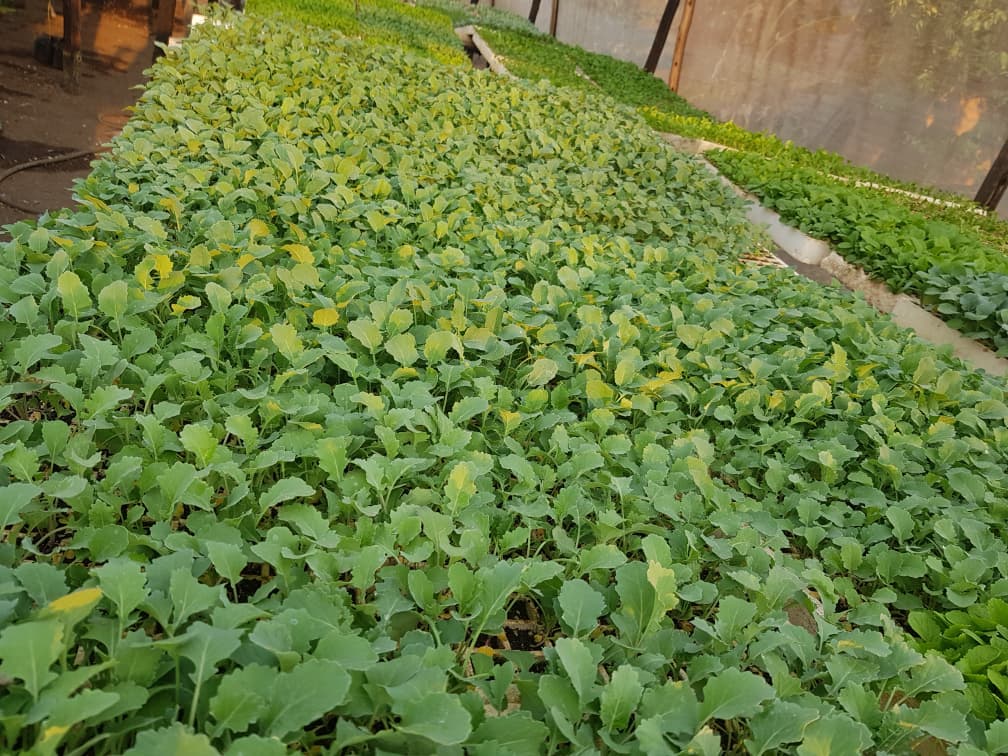
🌱Hobson Rape Seedlings in Zimbabwe — A Complete Farming Guide
🥬 Introduction to Hobson Rape
Hobson Rape (Brassica napus var. napobrassica) is a popular leafy vegetable variety highly favored by farmers across Zimbabwe for its vigorous growth, tender leaves, and high yields. It performs well under Zimbabwe’s diverse climatic conditions and is a staple green in local diets — making it an excellent crop choice for both small-scale and commercial farmers.
🌦️ Best Climate and Growing Conditions
Hobson Rape grows best under cool to moderate temperatures (15°C–25°C).
Ideal for regions like Mashonaland East, Mashonaland Central, Manicaland, and Midlands, where consistent rainfall or irrigation is available.
Altitude: 800–2,000 meters above sea level
Rainfall: 600–1,200 mm annually
Sunlight: At least 5–6 hours of sunlight daily
Ideal Season: Grows all year round under irrigation but thrives best during the cooler months (March–September)
🌾 Soil Preparation and Fertilization
Soil Type: Well-drained, fertile loam or sandy loam
Soil pH: 5.5–6.8
Land Preparation: Plough and harrow the land to a fine tilth before transplanting seedlings.
Fertilization Plan:
Basal Fertilizer: Apply Compound C or Compound S (200–300 kg/ha) at transplanting.
Top Dressing: Use Ammonium Nitrate (AN) at 150–200 kg/ha applied 2–3 weeks after transplanting and again after every major leaf harvest.
Pro Tip: Incorporate organic manure or compost (10–15 tons/ha) for better soil health and water retention.
🌱 Transplanting and Spacing
Seedling Age: 3–4 weeks old
Spacing:
Row spacing: 30 cm
Plant spacing: 20 cm
Bed width: 1 meter for easy management
Transplant Time: Early morning or late afternoon to reduce transplant shock.
Irrigation: Water immediately after transplanting and continue daily until seedlings are established.
💧 Irrigation and Water Management
Hobson Rape requires consistent moisture for vigorous leaf growth.
Use drip irrigation or furrow irrigation to maintain even soil moisture.
Avoid waterlogging, as it can cause root rot and disease.
Watering frequency:
3–4 times per week during dry periods
Daily light watering during establishment phase
🐛 Pest and Disease Management
Common pests include:
Aphids
Cutworms
Diamondback Moth
Cabbage Worm
Control Measures:
Use organic insecticides such as neem extract or pyrethrum-based sprays.
Rotate crops to reduce pest build-up.
Regularly inspect plants for early detection.
Common diseases include:
Downy Mildew
Leaf Spot
Black Rot
Disease Control:
Use disease-free seedlings from reputable nurseries like Carol’s Seedlings.
Avoid overhead irrigation.
Practice good field sanitation by removing infected leaves.
📈 Yield Potential and Harvesting
Days to Harvest: 45–60 days after transplanting
Expected Yield: 20–25 tons per hectare under good management
Harvest Method: Pick mature outer leaves regularly to encourage continuous regrowth.
Post-Harvest Handling: Wash leaves gently, grade by size and quality, and pack in clean crates for market.
💰 Market Opportunities in Zimbabwe
Hobson Rape has steady demand in:
Local vegetable markets
Supermarkets
Hotels and catering suppliers
Export markets (especially regional)
The crop’s short maturity period and year-round demand make it a highly profitable choice for farmers targeting urban and peri-urban markets.
🌍 Where to Buy Hobson Rape Seedlings in Zimbabwe
For high-quality, disease-free, and uniform Hobson Rape Seedlings, visit
👉 Carol’s Seedlings – Zimbabwe’s trusted supplier of vegetable seedlings for small-scale and commercial farmers.
Carol’s Seedlings offers expert farming advice, delivery options, and top-performing vegetable varieties across the country.
🤝 Expert Tip for Zimbabwean Farmers
To maximize profitability and leaf quality, follow a harvest-and-feed cycle — continuously harvest mature leaves while applying light doses of Ammonium Nitrate every 2–3 weeks to stimulate fresh growth.
Integrating mulching and proper irrigation scheduling also helps maintain yield consistency even in hot months.
❓ Frequently Asked Questions (FAQ)
Q1: How long does Hobson Rape take to mature?
A: It typically matures in 45–60 days depending on weather and management.
Q2: What is the ideal spacing for Hobson Rape seedlings?
A: Space plants 20 cm apart in rows 30 cm apart.
Q3: Can Hobson Rape be grown all year round in Zimbabwe?
A: Yes, with irrigation and proper pest management, it can be grown throughout the year.
Q4: What fertilizer works best for Hobson Rape?
A: Compound C for basal and Ammonium Nitrate (AN) for top dressing.
Q5: Where can I buy quality Hobson Rape seedlings?
A: From Carol’s Seedlings, Zimbabwe’s top vegetable seedling supplier.


I liked this. Agriculture facilitator