

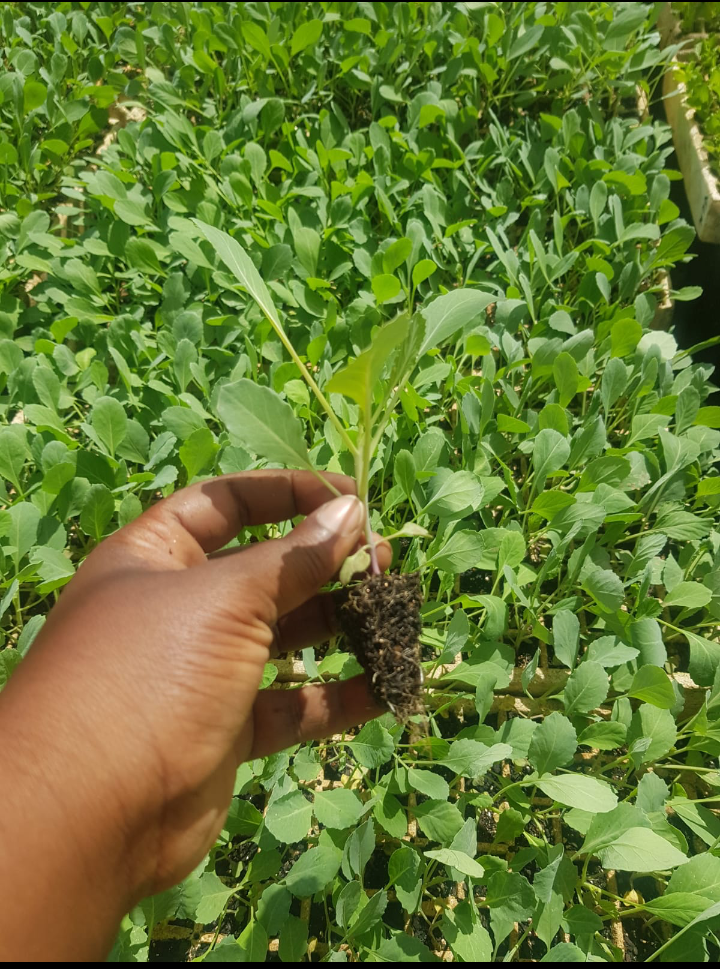
Kilimo Cabbage Seedlings in Zimbabwe: The Complete Farmer’s Guide (2025 Update)
Introduction
Cabbage farming remains one of Zimbabwe’s most profitable horticultural ventures, and Kilimo Cabbage stands out as one of the top-performing hybrid varieties for both small-scale and commercial farmers. Known for its excellent uniformity, large compact heads, and strong field resistance, Kilimo is ideal for farmers looking for high yields and strong market demand across Zimbabwe.
Whether you’re in Mashonaland, Manicaland, Matabeleland, or Masvingo, this guide will walk you through every step of growing Kilimo Cabbage Seedlings successfully—from nursery to market.
1. Overview of Kilimo Cabbage Variety
| Feature | Details |
|---|---|
| Type | Hybrid Cabbage |
| Maturity Period | 75 – 85 days after transplanting |
| Head Weight | 3 – 4 kg on average |
| Head Shape | Round to slightly flattened |
| Color | Blue-green compact heads |
| Climate Suitability | Cool to warm climate regions of Zimbabwe |
| Resistance | Tolerant to black rot and splitting |
| Market Use | Fresh market, wholesale, and retail sales |
Kilimo is a high-yield, uniform variety developed for consistency and adaptability—perfect for both dry and rainy seasons with good water management.
2. Ideal Growing Conditions in Zimbabwe
Kilimo thrives in cooler temperatures (15°C – 25°C) and well-drained, fertile soils. The best growing regions include:
Mashonaland East and Central (Murehwa, Bindura, Marondera)
Manicaland (Mutare Highlands, Rusape)
Midlands (Gweru, Shurugwi)
Matabeleland South (for irrigation projects)
💡 Tip: Avoid waterlogged areas, as cabbage roots rot quickly under poor drainage.
3. Soil Preparation and Fertilization
Soil pH: Maintain between 6.0 and 6.8.
Land Preparation: Deep plough (30 cm) to loosen soil and incorporate organic matter.
Manure Application: Apply 20–25 tonnes/ha of well-decomposed manure before transplanting.
Basal Fertilizer: Mix Compound C or Compound D (200–250 kg/ha) at planting.
Top Dressing:
Apply Ammonium Nitrate (150–200 kg/ha), split into 2–3 applications.
First at 3 weeks after transplanting, then again at 6 weeks.
✅ Pro Tip: Always side-dress to avoid fertilizer burn.
4. Nursery Management for Kilimo Cabbage Seedlings
If you’re not buying ready seedlings, start your nursery with quality seed.
Seed Rate: 100–120 grams per hectare.
Nursery Soil: Mix 3 parts loam soil, 1 part compost, 1 part river sand.
Watering: Keep moist but not soaked.
Transplanting Time: 4–5 weeks after sowing (4–5 true leaves stage).
🌱 For convenience, farmers can buy ready-to-transplant Kilimo Seedlings from Carol’s Seedlings Zimbabwe for uniform growth and faster field establishment.
5. Transplanting and Spacing
Spacing:
Between rows: 45–60 cm
Between plants: 30–45 cm
Planting Depth: Just above the root collar.
Watering: Immediately after transplanting and maintain regular moisture.
For 1 hectare, you’ll need about 35,000–40,000 plants depending on spacing.
6. Watering and Irrigation
Cabbages require consistent moisture.
Use drip or overhead irrigation depending on scale.
Water 2–3 times per week during dry spells.
Avoid water stress during head formation—it causes splitting and loose heads.
7. Pest and Disease Management
| Problem | Control Method |
|---|---|
| Cabbage Aphids | Spray with Dimethoate or Actara |
| Diamondback Moth | Use Coragen or Belt at early stages |
| Cutworms | Apply Carbaryl or Chlorpyrifos before transplanting |
| Black Rot | Practice crop rotation and avoid overhead irrigation |
| Downy Mildew | Spray with Copper-based fungicides |
🛡️ Integrated Pest Management (IPM) is key—combine biological, cultural, and chemical controls for sustainability.
8. Harvesting and Post-Harvest Handling
Harvest when heads are firm and well-formed.
Use a sharp knife and avoid cutting into the wrapper leaves.
Harvest early morning to reduce field heat.
Store in a cool, shaded, and well-ventilated area.
On average, Kilimo yields 60–70 tonnes per hectare under good management.
9. Marketing Opportunities in Zimbabwe
Kilimo’s uniformity and long shelf life make it ideal for:
Supermarkets (OK, Pick n Pay, Food Lovers Market)
Farmers’ Markets and Mbare Musika
Agro-processing buyers (coleslaw, salads, frozen veg)
Export markets (especially for clean, graded heads)
💼 Connect with local buyers through platforms like AgriUniverse Zimbabwe or direct farm contracts.
10. Key Advantages of Kilimo Cabbage for Farmers
✅ High uniformity and compact heads
✅ Excellent yield potential
✅ Resistant to splitting and black rot
✅ Strong market preference
✅ Suitable for staggered planting cycles
Must Read
Frequently Asked Questions (FAQ)
Q1: How long does Kilimo Cabbage take to mature?
A: It takes about 75–85 days from transplanting to harvest.
Q2: What is the ideal fertilizer for Kilimo Cabbage?
A: Start with Compound D at planting and use Ammonium Nitrate for top dressing.
Q3: Can I grow Kilimo Cabbage during the rainy season?
A: Yes, as long as you have well-drained soils and proper pest management.
Q4: Where can I buy Kilimo Cabbage Seedlings in Zimbabwe?
A: You can purchase from Carol’s Seedlings, which provides high-quality hybrid vegetable seedlings nationwide.


I learned a lot about this ndakuno rima