

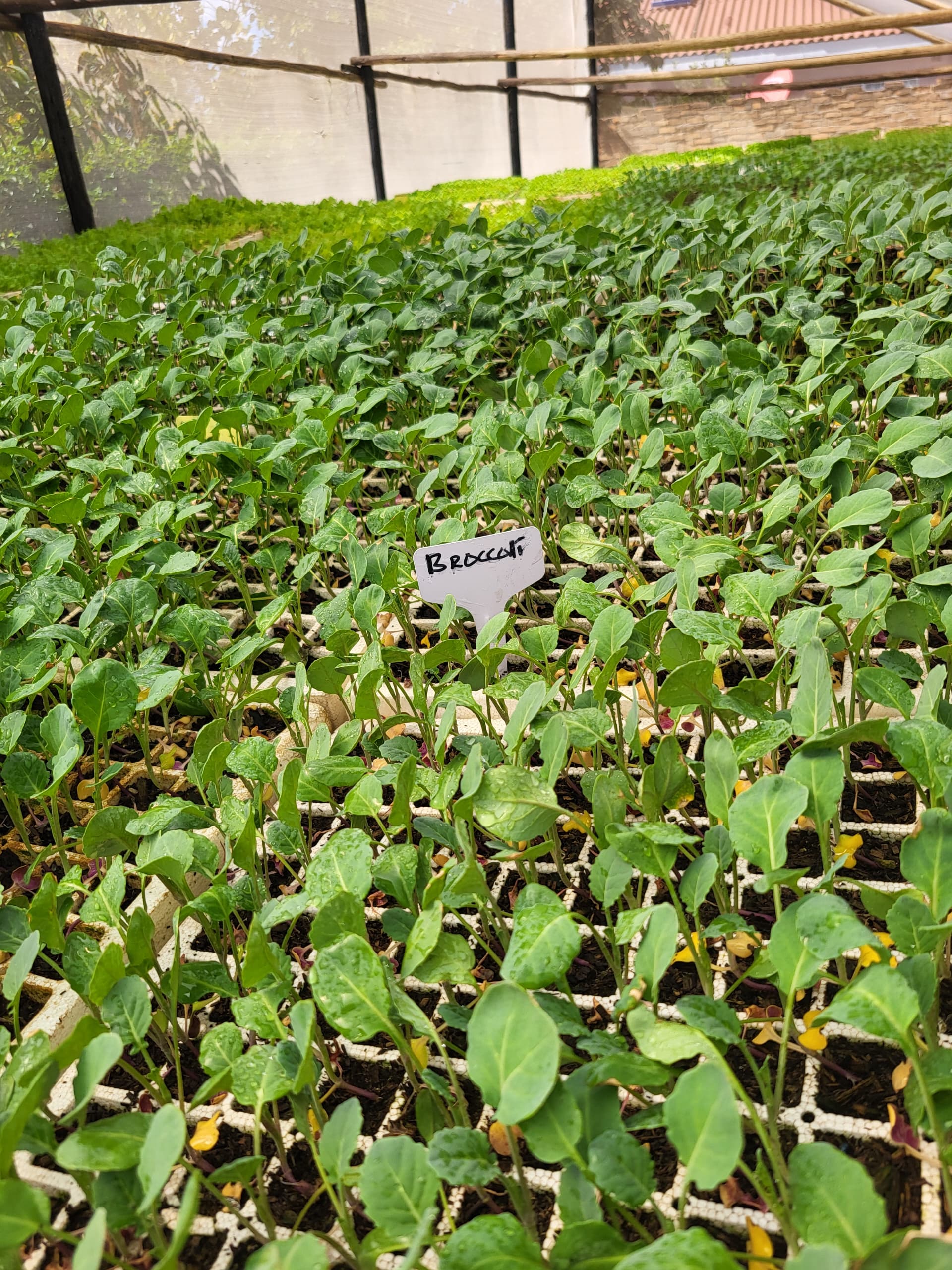
🥦Montop Broccoli Seedlings Farming Guide in Zimbabwe — High Yields, Excellent Florets & Consistent Performance
🌿 Introduction to Montop Broccoli Seedlings
Montop Broccoli is a hybrid variety renowned for its uniform, compact heads, fine bead structure, and strong adaptability to varying climates. It performs exceptionally well under Zimbabwean conditions, producing high-quality green florets ideal for both fresh markets and processing.
Montop’s uniform maturity, heat tolerance, and long field-holding ability make it one of the best choices for farmers targeting consistent harvests and premium-grade broccoli.
For farmers exploring related varieties, check out:
🌦️ Ideal Climate and Soil Requirements
Montop Broccoli thrives in cool to moderately warm climates and can adapt to various regions across Zimbabwe, from Mashonaland to Midlands.
Ideal Conditions:
Temperature: 14°C – 25°C
Altitude: 1,000 – 1,700 m
Rainfall: 500–800 mm per year
Soil Type: Well-drained loam or sandy loam rich in organic matter
Optimal Soil pH: 6.0 – 7.0
Avoid planting in acidic or poorly drained soils, as broccoli roots are sensitive to waterlogging and low pH.
🌱 Seedling Production and Land Preparation
Montop can be established using seedling trays or nursery beds. Use a sterile, well-drained medium for germination.
Seedling Stage Tips:
Germination Temperature: 18–22°C
Transplant Age: 4–6 weeks old
Hardening: Expose seedlings to outdoor conditions for 5–7 days before transplanting.
Land Preparation Steps:
Deep plough the land (25–30 cm) for good root penetration.
Apply 10–15 tons/ha of well-decomposed manure or compost.
Incorporate Compound C (6:15:12) at 300–400 kg/ha as a basal fertilizer.
Form raised beds or ridges for better aeration and drainage.
📅 Planting and Spacing
Row Spacing: 60 cm
In-row Spacing: 45 cm
Planting Depth: Same as nursery level — do not bury the growing point.
Transplanting Time: Early morning or late afternoon.
Planting Seasons:
Cool Season: March – August (ideal period)
Warm Season: September – February (under irrigation)
Water immediately after transplanting to reduce shock and encourage root establishment.
💧 Irrigation and Water Management
Broccoli requires regular and even moisture for consistent head formation and bead quality.
Irrigation Recommendations:
Frequency: 2–4 times per week, depending on weather.
System: Drip irrigation preferred for water efficiency.
Critical Stages: During head initiation and expansion.
Avoid water stress and overwatering — both can cause irregular heads or loose florets.
🌿 Fertilization Program
| Growth Stage | Fertilizer | Rate (kg/ha) | Application Time |
|---|---|---|---|
| Basal | Compound C (6:15:12) | 300–400 | Before planting |
| 3 Weeks After Transplant | Ammonium Nitrate (34.5% N) | 150 | Top dressing |
| 6 Weeks After Transplant | Ammonium Nitrate (34.5% N) | 150 | Top dressing |
| Head Formation | Calcium Nitrate / Foliar Feed | As per label | Enhances bead firmness and color |
Tip: Supplement with foliar sprays containing boron and molybdenum to prevent hollow stems and improve head uniformity.
🪱 Pest and Disease Management
🐛 Common Pests
Diamondback moth: Control using Coragen or biological products like Bacillus thuringiensis (Dipel).
Aphids: Manage using neem oil or systemic insecticides (e.g., Imidacloprid).
Cutworms: Apply Carbaryl granules during planting or use collars around stems.
🦠 Common Diseases
Downy mildew: Prevent with Mancozeb or Ridomil Gold sprays.
Black rot: Avoid overhead irrigation; plant disease-free seedlings.
Clubroot: Maintain soil pH above 6.5 through liming and crop rotation.
Adopt Integrated Pest Management (IPM) to balance chemical, cultural, and biological control methods.
🌸 Crop Management Practices
Weed regularly to reduce competition and pest habitats.
Hill up soil around the base to improve support and root anchorage.
Rotate with non-cruciferous crops (e.g., maize, beans) to maintain soil health.
Remove diseased plants immediately to prevent spread.
🧑🌾 Harvesting and Yield
Maturity Period: 75–85 days after transplanting.
Harvesting Stage: When heads are compact, firm, and dark green with fine beads.
Harvest Time: Early morning to retain freshness.
Expected Yield: 10–15 tons per hectare under optimal management.
Montop Broccoli’s heads hold longer in the field and post-harvest, allowing flexible harvesting schedules for markets.
💰 Market and Profitability
Montop Broccoli is highly marketable in Zimbabwe and the region, with demand from:
Fresh produce markets (Mbare, Sakubva, Bulawayo)
Supermarkets and hotels
Export traders and processors
Profit Estimate:
Gross margins range between US$2,000 – US$3,500 per hectare, depending on input costs, yield, and market timing.
🌍 Sustainable and Climate-Smart Practices
Apply organic compost to improve soil fertility.
Use drip irrigation to optimize water efficiency.
Rotate crops to prevent soil-borne diseases.
Integrate biofertilizers (like Trichoderma) to enhance root health.
Maintain mulch cover to conserve moisture and suppress weeds.
🧾 Record Keeping
Keep detailed records of:
Planting and harvesting dates
Fertilizer applications
Pesticide use and intervals
Yields and sales
Proper records improve farm management, traceability, and future productivity planning.
📞 Where to Buy Montop Broccoli Seedlings in Zimbabwe
High-quality Montop Broccoli Seedlings are available at:
Always purchase certified, disease-free seedlings for uniform growth and reliable field performance.
❓ Frequently Asked Questions (FAQ)
Q1: How long does Montop Broccoli take to mature?
Montop Broccoli matures in 75–85 days after transplanting, depending on temperature and management.
Q2: What spacing should I use for Montop Broccoli?
Maintain 45 cm × 60 cm spacing for optimal air circulation and head size.
Q3: What yield can I expect per hectare?
Expect 10–15 tons per hectare with good agronomic practices and irrigation.
Q4: How do I ensure compact broccoli heads?
Maintain consistent moisture, proper fertilization (especially nitrogen and calcium), and harvest before heads loosen.

