

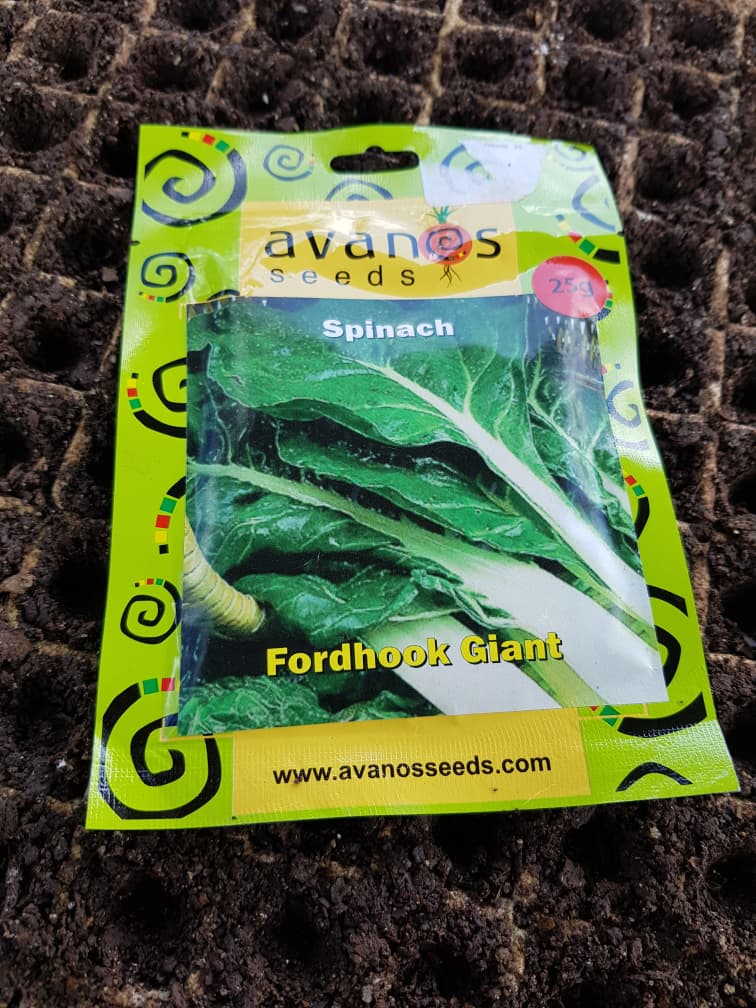
Fordhook Giant Spinach Seedlings in Zimbabwe: The Complete 2025 Farming Guide
Introduction
Spinach farming continues to play a major role in Zimbabwe’s horticultural sector due to its high nutritional value, short maturity cycle, and reliable market demand. Among the popular varieties, Fordhook Giant Spinach stands out as a vigorous, high-yielding, and heat-tolerant hybrid, making it an ideal choice for both home gardeners and commercial farmers.
Whether you’re growing in Mashonaland’s fertile soils, Matabeleland irrigation zones, or urban backyard gardens, this comprehensive guide will help you get the most out of your Fordhook Giant Spinach Seedlings.
1. Overview of Fordhook Giant Spinach Variety
| Feature | Details |
|---|---|
| Type | Leafy vegetable (Swiss Chard type) |
| Maturity Period | 50 – 65 days after transplanting |
| Leaf Color | Dark glossy green |
| Leaf Texture | Broad, crinkled, and tender |
| Growth Habit | Semi-upright, vigorous |
| Yield Potential | 25 – 35 tonnes per hectare |
| Climate Adaptation | Tolerant to heat and moderate cold |
| Use | Fresh market, home consumption, and export |
Fordhook Giant Spinach is a cut-and-come-again variety, allowing multiple harvests per planting cycle — making it an excellent income-generating crop for both backyard and commercial farming.
2. Ideal Growing Conditions in Zimbabwe
Spinach thrives in mild to warm climates and performs best in well-drained, fertile loam soils.
Optimum temperature: 15°C – 25°C
Rainfall requirement: Moderate (400–700 mm annually)
Best growing regions:
Mashonaland East (Marondera, Murehwa, Mutoko)
Manicaland (Rusape, Mutare)
Midlands (Gweru, Kwekwe)
Matabeleland North (Lupane, Nyamandlovu)
Irrigated peri-urban farms near Harare and Bulawayo
💡 Tip: Fordhook Giant can be grown year-round under irrigation, making it ideal for staggered production cycles.
3. Soil Preparation and Fertilization
Soil pH: Maintain between 6.0 and 6.8.
Land Preparation: Deep plough (30 cm) and remove weeds and stones.
Organic Matter: Apply 20 tonnes/ha of well-decomposed manure or compost before transplanting.
Basal Fertilizer: Incorporate Compound C or D (200–250 kg/ha) before planting.
Top Dressing:
Apply Ammonium Nitrate (100–150 kg/ha) every 2–3 weeks after each cutting.
✅ Pro Tip: Over-fertilizing with nitrogen may lead to soft leaves — maintain moderate feeding for firm, market-ready leaves.
4. Nursery Management for Fordhook Giant Spinach Seedlings
If you’re not purchasing ready seedlings, follow these steps for your nursery:
Seed Rate: 1.5–2 kg per hectare.
Nursery Mix: 3 parts loam soil, 1 part compost, 1 part river sand.
Sowing Depth: 1–1.5 cm deep.
Germination Period: 7–10 days.
Transplanting: 3–4 weeks after germination (4–5 true leaves stage).
🌱 For time efficiency and uniform establishment, buy ready-to-transplant Fordhook Giant Spinach Seedlings from Carol’s Seedlings Zimbabwe — guaranteed healthy and disease-free.
5. Transplanting and Spacing
Spacing:
Between rows: 30–40 cm
Between plants: 20–25 cm
Watering: Irrigate immediately after transplanting.
Mulching: Helps retain soil moisture and control weeds.
For one hectare, approximately 90,000–100,000 plants are required depending on spacing.
6. Irrigation and Water Management
Spinach requires consistent moisture to produce tender, market-quality leaves.
Water 2–3 times per week depending on weather and soil type.
Avoid waterlogging as it causes root rot.
Use drip irrigation for efficient and uniform watering.
💧 Tip: Maintain soil moisture during regrowth after each harvest to promote quick leaf recovery.
7. Pest and Disease Management
| Pest/Disease | Control Method |
|---|---|
| Aphids | Spray with Actara or Imidacloprid |
| Leaf Miners | Use Coragen or Belt |
| Cutworms | Apply Carbaryl before transplanting |
| Downy Mildew | Spray with Mancozeb or Copper-based fungicides |
| Whiteflies | Apply Confidor or Neem oil sprays |
| Root Rot | Avoid overwatering and ensure good drainage |
🛡️ Integrated Pest Management (IPM) is essential — rotate crops and maintain field hygiene to reduce pest buildup.
8. Harvesting and Post-Harvest Handling
First harvest: 45–60 days after transplanting.
Pick outer mature leaves while allowing inner leaves to continue growing.
Harvest every 7–10 days depending on regrowth rate.
Avoid harvesting during midday heat to prevent wilting.
Wash and bundle spinach in cool, shaded areas to maintain freshness.
Under optimal management, Fordhook Giant Spinach can yield up to 35 tonnes per hectare over multiple harvests.
9. Marketing Opportunities in Zimbabwe
Spinach has consistent year-round demand across various markets, including:
Local Supermarkets (OK, Pick n Pay, Food Lovers Market)
Wholesale Markets (Mbare Musika, Sakubva, Gweru)
Export buyers (South Africa and Mozambique)
Institutional Buyers (schools, hospitals, hotels)
💼 Market your produce via platforms like AgriUniverse Zimbabwe or partner with local vegetable distributors for consistent supply contracts.
10. Key Advantages of Fordhook Giant Spinach for Farmers
✅ High yield and multiple harvests per crop
✅ Heat tolerant and adaptable to most Zimbabwean climates
✅ Easy to grow and manage
✅ Strong market demand and fast turnover
✅ Can be grown year-round with irrigation
Other Resources
Frequently Asked Questions (FAQ)
Q1: How long does Fordhook Giant Spinach take to mature?
A: It matures in 50–65 days after transplanting, with multiple harvests possible.
Q2: What is the ideal spacing for spinach?
A: Space plants 30–40 cm between rows and 20–25 cm between plants.
Q3: Can Fordhook Giant Spinach be grown year-round?
A: Yes — it performs well throughout the year, especially under irrigation.
Q4: Where can I buy Fordhook Giant Spinach Seedlings in Zimbabwe?
A: You can buy quality seedlings from Carol’s Seedlings Zimbabwe, available nationwide.

