

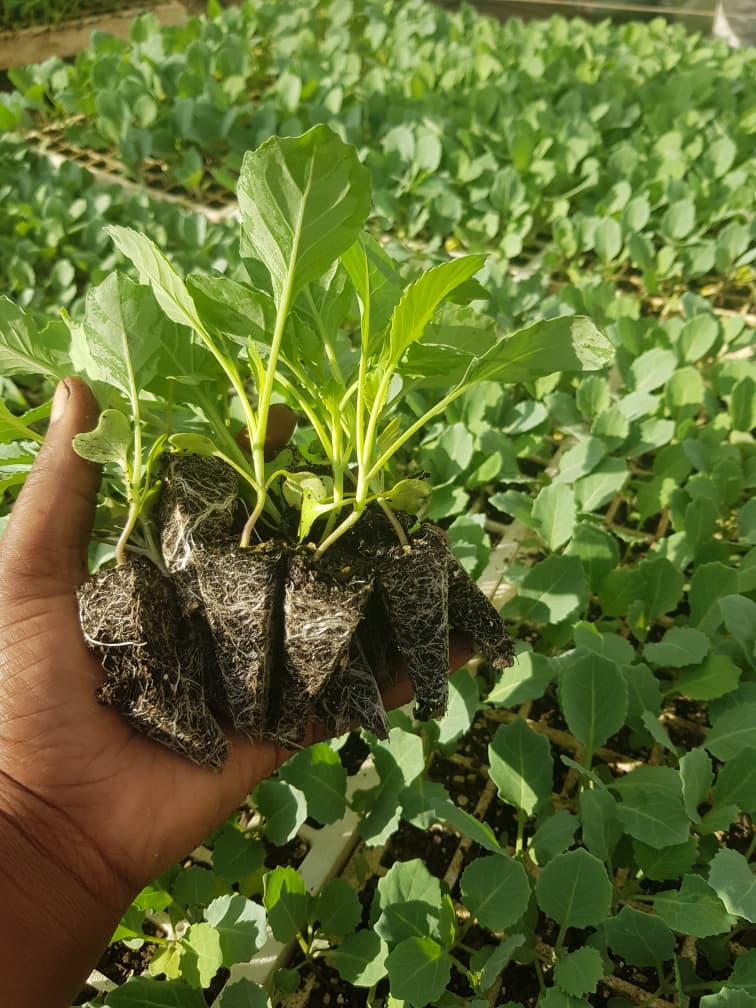
🥬Kiwa Cabbage Seedlings: The Complete Farming Guide for Zimbabwean Farmers
🏡 Introduction: Why Kiwa Cabbage Is Ideal for Zimbabwean Farmers
Cabbage remains one of Zimbabwe’s most profitable and resilient vegetables, thriving across diverse regions such as Mashonaland, Midlands, and Manicaland. Kiwa Cabbage, known for its high yield, compact heads, and market appeal, is increasingly becoming the variety of choice for both small-scale and commercial farmers.
Whether you’re farming a 2500sqm or a 10-hectare plot, this guide walks you through every step — from transplanting seedlings to post-harvest handling — ensuring you maximize your returns.
💡 Recommended Reading: Commander Lettuce Seedlings: The Ultimate Farming Guide for Zimbabwean Growers
🌱 Step 1: Understanding the Kiwa Cabbage Variety
Kiwa Cabbage is a hybrid variety bred for:
High yield potential (up to 80–100 tonnes per hectare)
Compact, firm heads weighing 4–5 kg each
Resistance to common cabbage diseases like black rot and fusarium wilt
Short maturity period of 65–70 days after transplanting
Uniform size and color, ideal for supermarket and market sales
🌿 Tip: Always purchase certified Kiwa Cabbage seedlings from reputable suppliers such as Carol’s Seedlings Zimbabwe to ensure strong, disease-free plants.
🌾 Step 2: Ideal Growing Conditions in Zimbabwe
| Requirement | Ideal Range / Description |
|---|---|
| Climate | Cool to moderate temperatures (15°C – 25°C) |
| Altitude | Best grown between 900 – 2000 m above sea level |
| Rainfall | 500 – 800 mm annually or consistent irrigation |
| Soil Type | Well-drained loamy soil rich in organic matter |
| Soil pH | 5.8 – 6.5 for optimal nutrient absorption |
Pro Tip: Rotate your cabbage crop with legumes like beans or peas to replenish soil nitrogen and reduce pest build-up.
🌿 Step 3: Land Preparation & Soil Management
Plough or rip the field to a fine tilth 3–4 weeks before transplanting.
Incorporate manure (10–15 tons/ha) or compost to boost organic content.
Apply basal fertilizer using a compound such as Compound C or D at 300–400 kg/ha before planting.
Make raised beds in areas with poor drainage to prevent waterlogging.
🧑🌾 Related Article: How to Prepare Soil for Vegetable Seedlings in Zimbabwe
🌱 Step 4: Transplanting Kiwa Seedlings
Seedlings age: 4–6 weeks old with 4–5 true leaves.
Spacing: 45–60 cm between plants and 60–75 cm between rows.
Transplant time: Late afternoon to reduce heat stress.
Water immediately after transplanting to help roots establish.
💧 Apply a starter fertilizer (e.g. Miracle-Gro or 2:3:2) for strong root development.
💦 Step 5: Irrigation Management
Kiwa cabbage requires consistent moisture — water stress causes splitting and poor head formation.
Early growth stage: Water every 2–3 days
Head formation stage: Increase frequency to daily if temperatures are high
Avoid overwatering — too much moisture encourages root rot and fungal diseases.
Drip irrigation is ideal for water efficiency.
🧪 Step 6: Fertilizer Application Schedule
| Growth Stage | Fertilizer Type | Rate & Timing |
|---|---|---|
| Basal | Compound D (7:14:7) | 300–400 kg/ha before planting |
| Top Dressing 1 | Ammonium Nitrate | 100 kg/ha at 3 weeks after transplanting |
| Top Dressing 2 | Ammonium Nitrate | 150 kg/ha at 6 weeks after transplanting |
Always apply fertilizers after watering to prevent burning roots.
🐛 Step 7: Pest and Disease Management
Common Pests:
Diamondback moth
Aphids
Cutworms
Cabbage looper
Control Methods:
Rotate crops annually
Use neem-based or biological sprays
Apply recommended insecticides such as Karate, Belt, or Coragen under supervision
Common Diseases:
Black rot
Downy mildew
Clubroot
Prevention Tips:
Maintain good field hygiene
Avoid waterlogging
Treat nursery soil with fungicides before planting
🧩 See Also: Guide to Organic Pest Control for Leafy Vegetables in Zimbabwe
🧺 Step 8: Harvesting & Post-Harvest Handling
Harvest time: 75–85 days after transplanting when heads are firm.
Use a sharp knife and cut the head with a short stem.
Avoid harvesting in midday heat to maintain freshness.
Sort and grade cabbage according to size and quality.
Store in a cool, shaded place (ideally 10–15°C).
Yield Expectation:
Small-scale (2500sqm): 20-25 tonnes
Commercial (1 hectare): 80–100 tonnes
💰 Step 9: Market & Profitability
Kiwa cabbage has a steady demand in:
Local markets (Mbare Musika, Sakubva, etc.)
Retail chains and supermarkets
School feeding and catering programs
Export markets (Mozambique, Zambia)
Estimated Profitability (per hectare):
| Cost Component | Approx. USD |
|---|---|
| Land prep & inputs | $1,200 |
| Seedlings | $350 |
| Fertilizer & chemicals | $500 |
| Labour & irrigation | $400 |
| Total Cost | $2,450 |
| Expected Revenue (80 tonnes @ $0.15/kg) | $12,000 |
| Profit | ≈ $9,500/ha |
📈 Final Thoughts
Kiwa cabbage is not just a vegetable — it’s a profitable agribusiness opportunity for Zimbabwean farmers who manage their soil, water, and pest control efficiently. By following these steps, you’ll increase your yields, market quality, and sustainability.
🚜 Start your next planting season strong with certified Kiwa Cabbage seedlings from Carol’s Seedlings Zimbabwe.
❓Frequently Asked Questions (FAQ)
1. What is the best time to plant Kiwa Cabbage in Zimbabwe?
The best time is during the cooler months (March–August), but with irrigation, it can be grown all year round.
2. How long does Kiwa Cabbage take to mature?
It matures in about 65–70 days after transplanting.
3. Can I grow Kiwa Cabbage organically?
Yes. You can use compost, neem oil, and crop rotation for organic production.
4. What’s the average yield per hectare?
With good management, expect 80–100 tonnes per hectare.

