

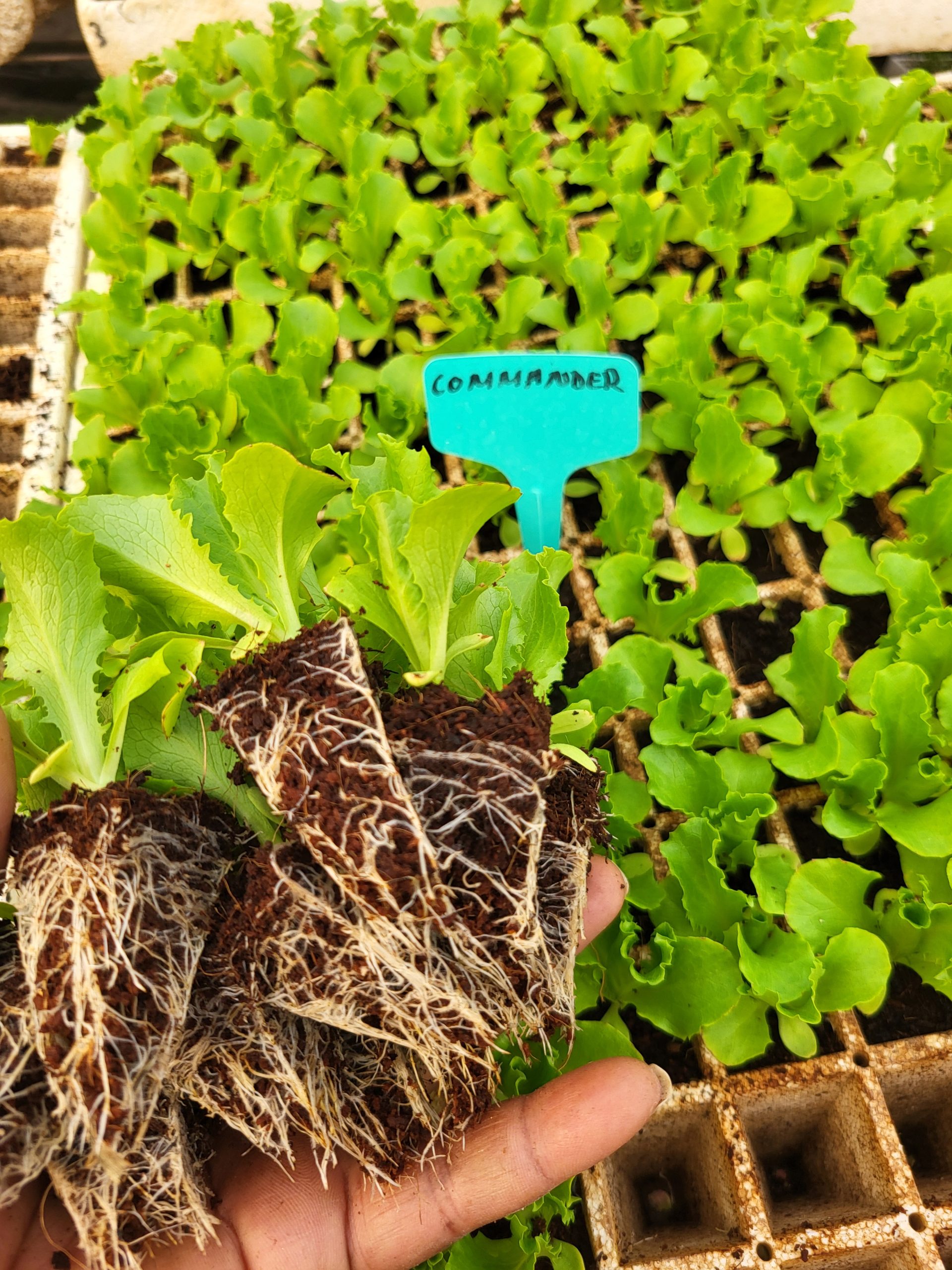
🥬Commander Lettuce Seedlings: The Ultimate Farming Guide for Zimbabwean Growers
🌿 Introduction: Why Commander Lettuce is a Game Changer for Zimbabwean Farmers
Lettuce farming is booming in Zimbabwe, especially with the rise of restaurants, supermarkets, and salad bars across cities like Harare, Bulawayo, and Mutare. Among the leading varieties, Commander Lettuce stands out for its adaptability, strong disease resistance, and market appeal.
Whether you’re a small-scale grower supplying local markets or a commercial farmer targeting wholesale and supermarket chains, this guide provides every step you need for high-yield, quality lettuce production.
💡 Related Reading: Complete Guide to Kiwa Cabbage Farming in Zimbabwe
🧬 Step 1: Understanding Commander Lettuce
Commander Lettuce is a crisphead (iceberg-type) variety developed for superior uniformity, resistance, and shelf life — perfect for Zimbabwe’s mixed climate.
🌱 Key Features:
Compact, heavy heads (600–800 g)
High resistance to tip burn and downy mildew
Excellent field standing ability
Crisp texture and long post-harvest life
Maturity: 55–65 days after transplanting
🧑🌾 Tip: Always use certified seedlings from reputable nurseries like Carol’s Seedlings Zimbabwe to ensure uniform growth and disease resistance.
🌾 Step 2: Ideal Growing Conditions in Zimbabwe
| Requirement | Ideal Conditions |
|---|---|
| Climate | Cool and moderately warm regions (12°C – 22°C) |
| Altitude | Best grown between 1,000 – 1,800 m above sea level |
| Rainfall | 500 – 800 mm/year (supplement with irrigation) |
| Soil | Well-drained sandy loam rich in organic matter |
| Soil pH | 6.0 – 6.8 |
Regions suited for Commander Lettuce: Mashonaland East & West, Midlands, Manicaland, and parts of Matabeleland with reliable irrigation.
🌱 Related Article: Top 5 Vegetables to Grow Profitably in Zimbabwe
🌿 Step 3: Land Preparation & Bed Formation
Clear weeds and debris 3–4 weeks before planting.
Plough the soil to a fine tilth and incorporate 10–15 tons/ha of compost or manure.
Create raised beds (1–1.2 m wide) for good drainage.
Apply Compound C or D fertilizer (300–400 kg/ha) as a basal dressing.
💧 Tip: Lettuce roots are shallow — avoid compacted soils and ensure even watering.
🌱 Step 4: Transplanting Commander Lettuce Seedlings
Seedling age: 4–5 weeks (4–5 true leaves)
Spacing: 30 cm between plants × 40 cm between rows
Best time: Early morning or late afternoon
Water immediately after transplanting
For hydroponic or greenhouse systems, maintain spacing consistency to allow uniform head development and airflow.
🚜 Read More: Guide to Hydroponic Lettuce Farming in Zimbabwe
💦 Step 5: Irrigation Management
Lettuce thrives on consistent and moderate moisture.
Too much water leads to soft heads; too little causes bolting (premature flowering).
Recommended Schedule:
Seedling stage: Water daily (light irrigation)
Head formation: Water every 2–3 days
Before harvest: Reduce watering to firm up heads
Irrigation Methods: Drip irrigation is ideal for efficiency and disease prevention.
🧪 Step 6: Fertilizer Program for Commander Lettuce
| Growth Stage | Fertilizer Type | Rate & Timing |
|---|---|---|
| Basal | Compound D (7:14:7) | 300–400 kg/ha before planting |
| Top Dressing 1 | Ammonium Nitrate | 100 kg/ha at 3 weeks after transplanting |
| Top Dressing 2 | Ammonium Nitrate | 100 kg/ha at 5 weeks after transplanting |
Apply top dressing after irrigation to avoid burning leaves and roots.
You can also supplement with liquid calcium nitrate or seaweed extracts for strong head formation.
🐛 Step 7: Pest and Disease Management
Common Pests:
Aphids
Thrips
Cutworms
Leaf miners
Control Tips:
Use yellow sticky traps for early detection
Apply neem-based organic sprays or insecticides such as Karate and Tracer
Practice crop rotation and avoid successive lettuce crops in the same area
Common Diseases:
Downy mildew
Tip burn
Bottom rot
Prevention:
Maintain good air circulation
Avoid overhead watering
Use disease-resistant Commander Lettuce seedlings
🌿 Learn More: Organic Pest Control for Leafy Vegetables in Zimbabwe
🧺 Step 8: Harvesting and Post-Harvest Handling
Harvest Period: 60–70 days after transplanting
Signs of Maturity: Heads are firm, compact, and crisp
Cut with a sharp knife just above the soil line.
Harvest early morning to maintain freshness.
Sort and grade according to size and appearance.
Store in cool, humid conditions (4°C – 10°C).
Expected Yield:
Small-scale (¼ acre): 5–7 tonnes
Commercial (1 hectare): 25–30 tonnes
💰 Step 9: Market Opportunities and Profitability
Commander Lettuce enjoys strong demand in:
Supermarkets and grocery stores
Hotels, restaurants, and salad bars
Fresh produce markets (Mbare, Sakubva, etc.)
Export markets (Mozambique, Zambia)
Estimated Profitability (Per Hectare):
| Cost Component | Approx. USD |
|---|---|
| Land prep & inputs | $1,000 |
| Seedlings | $400 |
| Fertilizers & chemicals | $600 |
| Labour & irrigation | $400 |
| Total Cost | $2,400 |
| Expected Revenue (30 tonnes @ $0.60/kg) | $18,000 |
| Profit | ≈ $15,600/ha |
💡 Tip: Partner with local suppliers like Carol’s Seedlings Zimbabwe for bulk Commander Lettuce seedlings and planting schedules.
🌍 Sustainability Tip
Use mulching and drip irrigation to conserve water and prevent soil erosion. Integrate legumes and herbs nearby to deter pests naturally.
📈 Final Thoughts
Commander Lettuce is a high-value, fast-turnover crop perfect for Zimbabwe’s evolving vegetable markets. Its disease resistance, crisp texture, and strong market demand make it ideal for both small-scale and commercial production.
By following the steps in this guide — from proper soil preparation to market strategy — you’ll ensure a consistent, profitable, and sustainable harvest.
🪴 Get started today with premium Commander Lettuce Seedlings from Carol’s Seedlings Zimbabwe.
❓Frequently Asked Questions (FAQ)
1. How long does Commander Lettuce take to mature?
It matures in 60–70 days after transplanting, depending on temperature and care.
2. What’s the best planting season for lettuce in Zimbabwe?
Commander Lettuce performs best during cooler months (March–August) but can be grown all year with irrigation.
3. Can I grow Commander Lettuce in a greenhouse?
Yes — it performs exceptionally well in greenhouse or hydroponic setups for year-round production.
4. What’s the average yield per hectare?
With good management, expect 25–30 tonnes per hectare.


Very clear to the point information. Thank you.