

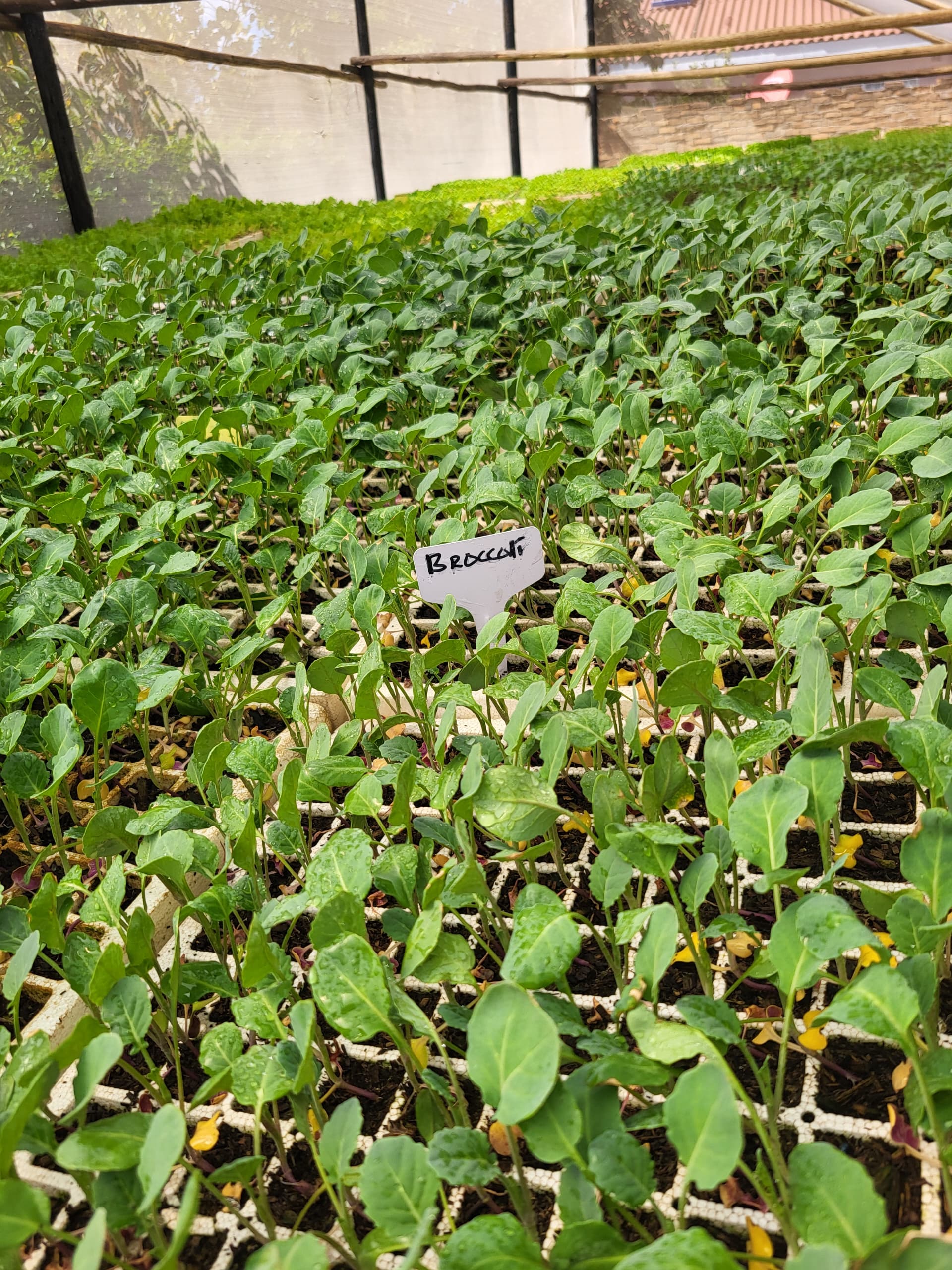
🥦Cigno Broccoli Seedlings in Zimbabwe: A Complete Farming Guide for High-Quality Yields
🌱 Introduction to Cigno Broccoli
Cigno Broccoli is a high-performing hybrid variety that produces compact, uniform heads with deep green color and excellent curd density. It is ideal for both fresh market and processing, making it a favorite among Zimbabwean farmers aiming for profitability and reliability in broccoli farming.
Whether you are a commercial grower in Norton or a small-scale farmer in Marondera, Cigno Broccoli offers high yields, adaptability, and strong market demand across the country.
🌍 Why Choose Cigno Broccoli for Zimbabwean Farming?
Cigno Broccoli thrives in Zimbabwe’s mild temperatures and fertile soils, performing exceptionally well in both open fields and tunnel systems. It offers excellent heat tolerance, uniform maturity, and extended field holding ability — reducing harvest losses and increasing profitability.
Key Advantages of Cigno Broccoli Seedlings:
Produces uniform dome-shaped heads
Excellent field holding (delays flowering)
Strong adaptability to Zimbabwean climates
Resistant to major broccoli diseases
Excellent taste and texture for fresh markets
🌾 Ideal Growing Conditions for Cigno Broccoli
| Factor | Recommended Condition |
|---|---|
| Climate | Cool to moderate (15°C–25°C) |
| Soil Type | Well-drained loamy or sandy loam |
| pH Range | 6.0 – 7.0 |
| Rainfall/Irrigation | 30–40 mm per week |
💡 Tip: For best results, plant Cigno Broccoli in high-altitude areas such as Nyanga, Marondera, Macheke, and Mutare, where temperatures are cooler and soils are fertile.
🧑🌾 Land Preparation and Transplanting
Plough deeply and break large soil clods to create a fine tilth.
Add 10–15 tons/ha of well-rotted manure or compost to boost organic matter.
Prepare raised beds (15–20 cm high) to prevent waterlogging.
Irrigate the nursery bed one day before transplanting.
🌱 Transplanting Guide
Seedling Age: 4–6 weeks old (10–15 cm tall)
Spacing: 45 cm between plants × 60 cm between rows
Plant Density: ~37,000–40,000 plants/ha
Transplant Time: Early morning or late afternoon
🚿 Pro Tip: Water seedlings immediately after transplanting and provide shade for the first few days to reduce transplant shock.
🌿 Fertilizer and Nutrient Management
| Stage | Fertilizer Type | Application Rate | Timing |
|---|---|---|---|
| Basal (Before Transplanting) | Compound C (5:15:12) | 300–400 kg/ha | Mix into soil during bed prep |
| 3 Weeks After Transplant | AN (34.5% N) | 200 kg/ha | Side dress around plant base |
| Before Head Formation | Urea or AN | 150 kg/ha | Stimulate vegetative growth |
💧 Maintain consistent moisture levels during the growing season. Irregular watering may lead to uneven head development or premature flowering.
🐛 Pest and Disease Management
Common Pests
Diamondback moth
Aphids
Cutworms
Cabbage looper
Control Measures
Use Bt-based biological pesticides (Bacillus thuringiensis).
Rotate crops to prevent pest build-up.
Install yellow sticky traps for aphid and moth control.
Encourage natural predators like ladybirds and lacewings.
Common Diseases
Downy mildew
Black rot
Damping-off in seedlings
Disease Prevention
Avoid waterlogging and overhead irrigation at night.
Use certified disease-free seedlings.
Apply copper-based fungicides preventively when humidity is high.
🌸 Head Formation, Harvesting, and Post-Harvest Handling
Maturity Period: 70–80 days after transplanting
Harvesting Stage: When heads are compact, firm, and deep green before flower buds open
Harvesting Method: Cut with a sharp knife, leaving 10–15 cm of stem
Expected Yield: 10–12 tons/ha under good management
🧊 Post-Harvest Tip: Immediately cool harvested heads to 0–5°C to retain freshness, color, and firmness for up to two weeks.
💰 Market Opportunities in Zimbabwe
Broccoli, particularly the Cigno variety, is gaining popularity among:
Urban supermarkets (OK Zimbabwe, TM Pick n Pay, Food Lovers Market)
Restaurants and hotels in Harare, Bulawayo, and Victoria Falls
Export markets in South Africa and Mozambique
Farmers can maximize returns by selling through contract farming, wholesale markets, or direct farm-to-table supply chains supported by suppliers like Carol’s Seedlings Zimbabwe.
🔗 Recommended Reads
❓ Frequently Asked Questions (FAQ)
1. How long does Cigno Broccoli take to mature in Zimbabwe?
Cigno Broccoli takes 70–80 days to mature after transplanting under optimal conditions.
2. When is the best time to plant Cigno Broccoli?
Best planting windows are March–July and September–November, depending on your region’s temperature and altitude.
3. How much fertilizer should I apply per hectare?
Use 300–400 kg/ha of Compound C as basal fertilizer and 200 kg/ha of AN as top dressing.
4. Is Cigno Broccoli suitable for organic farming?
Yes. Use organic compost, biological pest control, and mulching to maintain soil fertility and control pests naturally.

