

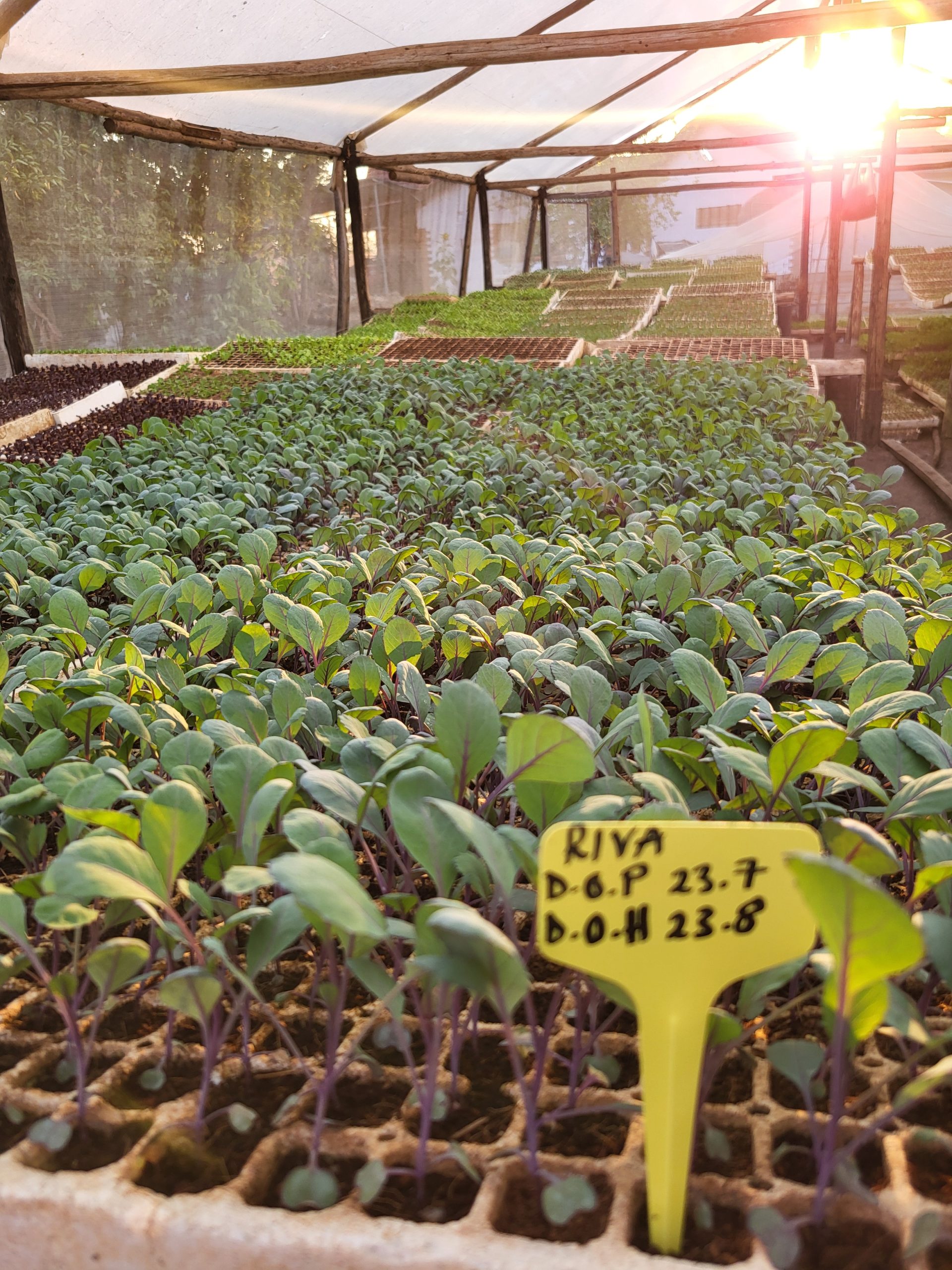
🥬Riva Red Cabbage Seedlings Farming Guide in Zimbabwe — Vibrant, High-Yield, and Market-Preferred Variety
🌿 Introduction to Riva Red Cabbage Seedlings
Riva Red Cabbage is a premium hybrid red cabbage variety recognized for its deep purple-red color, firm heads, and excellent field performance across Zimbabwe’s major vegetable-producing regions.
Favored by both smallholder and commercial farmers, Riva Red stands out for its uniform maturity, long shelf life, and high market demand — especially from supermarkets, hotels, and export buyers.
This variety complements popular green hybrids like Optima Cabbage Seedlings, Magesty Cabbage Seedlings, and Indica Cabbage Seedlings, allowing farmers to diversify production and target premium niche markets.
🌦️ Ideal Climate and Soil Requirements
Riva Red Cabbage grows best in cool to moderately warm climates, similar to most hybrid cabbages.
Optimal Growing Conditions:
Temperature: 15°C – 26°C
Rainfall: 500–850 mm annually
Soil Type: Well-drained loam or sandy loam
Soil pH: 6.0 – 6.8
Avoid planting in low-lying areas prone to waterlogging. Regular soil testing is essential for balancing nutrients and maintaining proper pH levels.
🌱 Seedling Stage and Land Preparation
Seedling Production:
Start seedlings in trays or raised nursery beds using a sterile potting mix (peat moss + compost + perlite or river sand).
Germination occurs within 4–7 days, and seedlings are ready for transplanting after 4–5 weeks.
Land Preparation Steps:
Deep plough to at least 25 cm.
Incorporate 10–15 tons/ha of well-rotted manure.
Apply Compound C fertilizer (6:15:12) at 300–400 kg/ha before transplanting.
Make ridges or raised beds to improve drainage and aeration.
📅 Planting and Spacing
Transplanting Age: 4–6 weeks old seedlings
Spacing: 45 cm × 60 cm (for compact heads)
Planting Depth: Equal to nursery level
Best Planting Seasons:
Cool Season: March to August
Warm Season: September to February (under irrigation)
Transplant during early morning or late afternoon and water immediately after planting to minimize shock.
💧 Irrigation and Water Management
Riva Red Cabbage requires consistent moisture for proper head formation and color development.
Irrigation Guidelines:
System: Drip or overhead sprinkler (avoid prolonged leaf wetness)
Frequency: 2–3 times per week depending on temperature and soil type
Mulching: Apply organic mulch to retain moisture and regulate soil temperature
Uniform watering ensures vibrant head color and prevents cracking.
🌿 Fertilization Program
| Stage | Fertilizer | Rate (kg/ha) | Timing |
|---|---|---|---|
| Pre-planting | Compound C (6:15:12) | 300–400 | Before transplanting |
| Early Growth (3 weeks) | Ammonium Nitrate (34.5% N) | 150 | Top dressing |
| Head Formation (6 weeks) | Ammonium Nitrate | 150 | Top dressing |
Tip: Supplement with organic fertilizers like compost tea or vermicast extract for improved color intensity and soil health.
🪱 Pest and Disease Management
🐛 Major Pests
Diamondback moth: Use biological controls (BT products) or Coragen.
Aphids: Manage with neem oil or systemic insecticides (Imidacloprid).
Cutworms: Drench soil around seedlings with Deltamethrin or Carbaryl.
🦠 Common Diseases
Black rot: Avoid overhead watering and rotate with legumes.
Downy mildew: Apply fungicides like Ridomil Gold or Mancozeb preventively.
Clubroot: Maintain soil pH above 6.5 using agricultural lime.
Use Integrated Pest Management (IPM) — combining cultural, organic, and chemical methods for sustainable control.
🌸 Crop Management Practices
Weed regularly to reduce competition.
Earth-up plants at 4–5 weeks for root anchorage and moisture retention.
Monitor weekly for pest and nutrient deficiencies.
Rotate with cereals or legumes every 2–3 years to reduce soil-borne diseases.
🧑🌾 Harvesting and Yield
Maturity Period: 80–90 days after transplanting
Harvest Signs: Firm, compact heads with rich reddish-purple color
Harvesting Method: Cut at the base, leaving 2–3 wrapper leaves for protection
Expected Yield: 50–65 tons per hectare under good management.
Riva Red’s firm heads allow for long-distance transport and extended shelf life, ensuring minimal post-harvest losses.
💰 Market and Profitability
Riva Red commands premium prices in Zimbabwean and regional markets due to its bright color, dense heads, and superior quality.
Market Outlets:
Local fresh produce markets (Mbare, Sakubva, Bulawayo)
Supermarkets and wholesalers
Export opportunities to regional markets (Botswana, South Africa, Mozambique)
Profit Estimate:
Farmers can earn US$3,000–5,000 per hectare depending on market season and yield quality.
🌍 Sustainable and Climate-Smart Practices
Rotate crops to maintain soil fertility.
Use organic mulches to conserve water.
Adopt drip irrigation for efficient water use.
Incorporate compost and green manure to boost soil structure and microbial activity.
Use bio-pesticides to reduce chemical residues.
🧾 Record Keeping
Track:
Sowing and transplanting dates
Input quantities and costs
Fertilizer and pesticide applications
Harvest volumes and sales revenue
Good records help evaluate productivity and profitability each season.
📞 Where to Buy Riva Red Cabbage Seedlings in Zimbabwe
Trusted suppliers include:
Always source certified seedlings for consistent results and disease-free planting material.
❓ Frequently Asked Questions (FAQ)
Q1: How long does Riva Red Cabbage take to mature?
Riva Red matures in 80–90 days after transplanting, depending on weather and management.
Q2: What is the spacing for Riva Red Cabbage?
Maintain 45 cm between plants and 60 cm between rows for uniform heads.
Q3: What yield can farmers expect per hectare?
Expect 50–65 tons/ha under optimal conditions with proper fertilization and pest control.
Q4: How do I maintain the deep red color of the heads?
Provide consistent irrigation, adequate nitrogen and potassium, and avoid heat stress for optimal pigmentation.

